
Analytics and Reporting: Driving Data-Driven Decisions
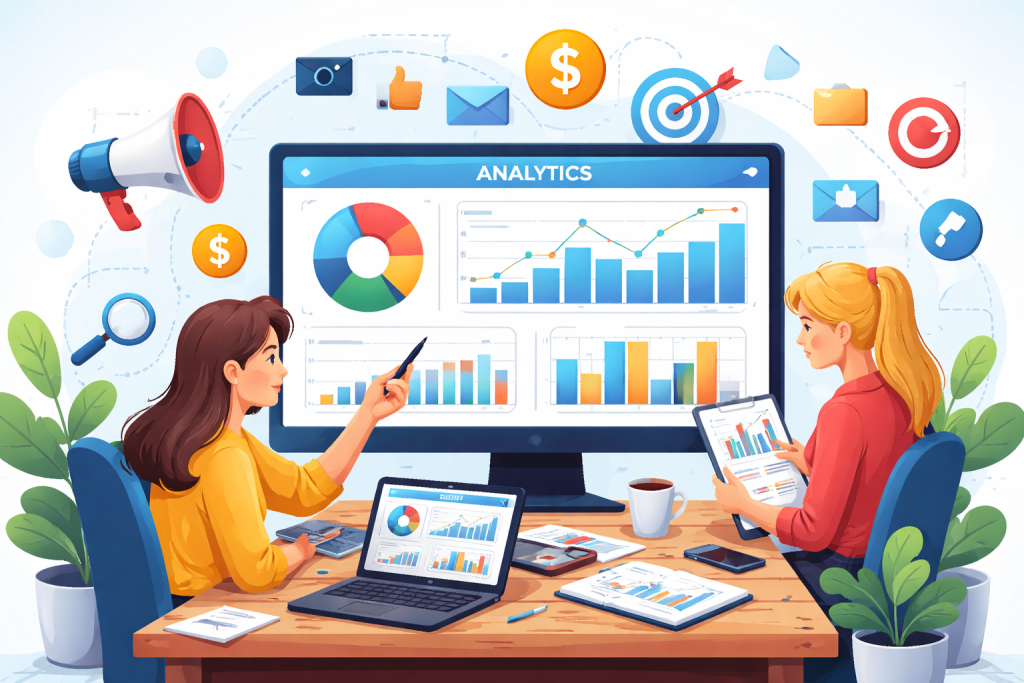
Analytics and reporting represent the processes by which organizations collect, process, analyze, and present data to derive insights and support decision-making. While often discussed together, they serve distinct but complementary functions in the business intelligence ecosystem.
Understanding Analytics
Analytics is the systematic computational analysis of data or statistics. It involves discovering, interpreting, and communicating significant patterns in data. Analytics goes beyond simply presenting numbers—it seeks to understand the “why” behind the data and predict future outcomes.
Types of Analytics:
- Descriptive Analytics: Examines historical data to understand what has happened. This includes standard business reports, dashboards, and basic data visualizations.
- Diagnostic Analytics: Investigates why something happened by drilling down into data to identify root causes and correlations.
- Predictive Analytics: Uses statistical algorithms and machine learning techniques to identify the likelihood of future outcomes based on historical data.
- Prescriptive Analytics: Recommends actions to take advantage of predicted outcomes, often using optimization and simulation algorithms.
Understanding Reporting
Reporting is the process of organizing information into accessible formats to monitor performance and communicate information. Reports typically present data in structured formats, often on a scheduled basis, to track key metrics against goals or benchmarks.
Types of Reports:
- Operational Reports: Day-to-day operational metrics (e.g., daily sales, production output)
- Tactical Reports: Medium-term performance tracking (e.g., quarterly marketing campaign results)
- Strategic Reports: High-level, long-term business insights (e.g., annual performance, market position)
- Ad-hoc Reports: Custom analyses created to answer specific business questions
The Relationship Between Analytics and Reporting
While reporting answers the question “What happened?”, analytics answers “Why did it happen?” and “What might happen next?” A typical data workflow might look like this:
- Data Collection: Gathering raw data from various sources
- Reporting: Organizing data into reports and dashboards
- Analysis: Examining reports to identify patterns and insights
- Decision-Making: Taking action based on analytical insights
- Measurement: Tracking outcomes to close the feedback loop
Key Components of Effective Analytics and Reporting
Data Infrastructure
- Data sources (internal systems, external data, IoT devices)
- Data warehouses and data lakes
- Data integration tools and processes
- Data quality management
Analytics Tools and Technologies
- Business Intelligence platforms (Tableau, Power BI, Looker)
- Statistical analysis software (R, Python, SAS)
- Big data technologies (Hadoop, Spark)
- Machine learning frameworks
Visualization and Presentation
- Dashboard design principles
- Chart selection guidelines
- Storytelling with data
- Interactive report features
People and Processes
- Analytics team structure
- Data governance policies
- Analytical methodologies
- Decision-making frameworks
Benefits of Effective Analytics and Reporting
- Improved Decision-Making: Data-driven decisions are typically more objective and consistent than those based on intuition alone.
- Operational Efficiency: Identifying bottlenecks and optimization opportunities reduces waste and improves productivity.
- Customer Insights: Understanding customer behavior leads to better products, services, and experiences.
- Competitive Advantage: Organizations that leverage data effectively can identify market opportunities before competitors.
- Risk Management: Analytics can help identify potential risks before they become significant problems.
Challenges in Analytics and Reporting
- Data Quality Issues: Inaccurate, incomplete, or inconsistent data leads to unreliable insights.
- Data Silos: When data is trapped in departmental systems, creating a comprehensive view becomes difficult.
- Skill Gaps: Many organizations lack professionals with the right combination of technical and business skills.
- Cultural Resistance: Shifting from intuition-based to data-driven decision-making often faces organizational resistance.
- Technology Limitations: Legacy systems may not support modern analytics requirements.
Best Practices for Implementation
- Start with Business Questions: Begin with what you need to know rather than what data you have.
- Ensure Data Governance: Establish clear policies for data quality, security, and access.
- Invest in Training: Build analytical capabilities across the organization, not just in specialized teams.
- Iterate and Evolve: Start with simple reports and gradually add more sophisticated analytics.
- Focus on Actionability: Design reports and analyses that lead to specific actions rather than just presenting information.
The Future of Analytics and Reporting
The field continues to evolve rapidly with several emerging trends:
- Augmented Analytics: AI-assisted data preparation, insight discovery, and explanation
- Natural Language Interfaces: Querying data using conversational language
- Real-Time Analytics: Moving from batch processing to continuous analysis
- Embedded Analytics: Integrating analytics directly into business applications
- Citizen Data Scientists: Tools that enable business users to perform sophisticated analyses
Conclusion
Analytics and reporting form the foundation of modern business intelligence, transforming raw data into actionable insights. While reporting provides the necessary visibility into performance, analytics delivers the deeper understanding needed for strategic decision-making. Organizations that master both capabilities gain significant competitive advantages in today’s data-driven business environment.
The key to success lies not just in implementing technology but in fostering a culture that values data-driven decision-making, investing in the right skills, and ensuring that analytics efforts are always aligned with business objectives.